FBT obligations are often difficult to tackle when there are deadlines, employee benefits and business records demanding your attention at the same time. One missed date and there might be sudden penalties, extra compliance reviews, and unnecessary stress for employers. This is exactly why understanding the key FBT return due dates 2026 is important for businesses across Australia.
Be it a small company or a larger workforce, clear knowledge of the lodgement deadlines and reporting requirements allows you to stay equipped throughout the process. This guide will help you to understand essential FBT dates, lodgement rules, and common compliance requirements:
An FBT return Australia is a tax document that is lodged with the Australian Taxation Office (ATO) by businesses. Its purpose is to report fringe benefits provided to employees or their associates during the FBT year. These are mainly non-cash perks offered in addition to regular salary or wages. The FBT year in Australia runs from 1 April to 31 March.
Common fringe benefits might consist of the following:
However, not every business has FBT obligations. Even then, employers should still review employee benefits carefully each year. This is when a lot of businesses choose professional FBT lodgement service support to help with calculations, documentation, and accurate return preparation before the due date.
The FBT year does not follow the standard financial year used for income tax reporting in Australia. Hence, employers need to track employee benefits within a separate reporting period to meet compliance obligations and avoid missing the FBT return due date Australia. Given here is a table that will make record management and lodgement much easier:
| FBT Activity | Important Dates |
| Start of FBT year | 1 April 2025 |
| End of FBT year | 31 March 2026 |
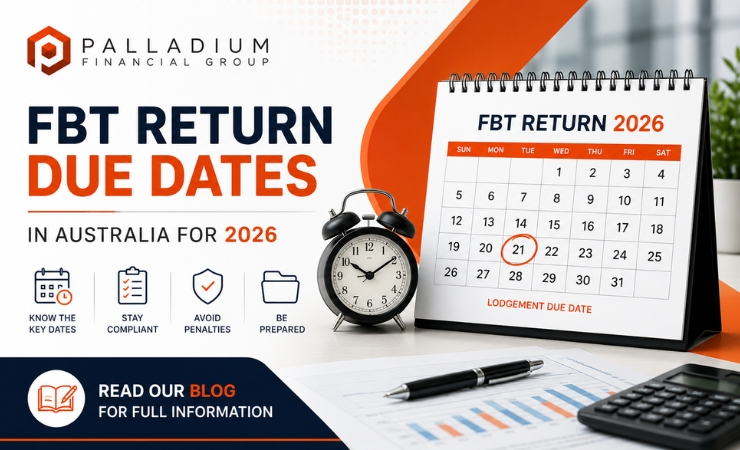
| Paper lodgement due date | 21 May 2026 |
| Tax agent electronic lodgement due date | 25 June 2026 |
| FBT payment due date | Same day as lodgement |
| Employee declaration collection | Before lodgement preparation |
| Vehicle odometer readings deadline | 31 March 2026 |
| Record retention recommendation | Minimum 5 years |
Your business has to stay updated with the official FBT lodgement due dates to make sure that reporting, payments and supporting records are completed on time. Missing the lodgement deadlines mentioned below might result in extra scrutiny by the ATO.
| Requirement | Details |
| Self-lodged FBT return deadline | 21 May 2026. |
| Electronic lodgement through a registered tax agent | 25 June 2026. |
| Payment deadline for FBT liability | Due on the same date as lodgement. |
| Businesses required to lodge | Employers providing taxable fringe benefits. |
| Common records needed before lodgement | Employee declarations, receipts, logbooks, reimbursement records. |
| Vehicle-related documentation | Current logbooks and final odometer readings. |
| Entertainment expense review | Meal, travel, and staff entertainment expenses should be classified with accuracy. |
| Electric vehicle review | Check exemption eligibility for EVs and PHEVs. |
| Contractor arrangement review | Review employee-like contractor benefits for possible FBT obligations. |
| ATO compliance focus areas | Company vehicles, entertainment claims, payroll consistency, STP reporting. |
| Recommended preparation period | Begin document collection well before May 2026. |
| Lodgement support option | Registered tax agents may assist with calculations and filing requirements. |
Businesses that provide fringe benefits to employees or their associates during the FBT year might need to submit an FBT return to the ATO. To make this process easier, employers should work with a business tax accountant to identify taxable benefits correctly and avoid reporting errors.
Businesses that provide the following might need to lodge:
Here are some other necessary situations that may also create FBT obligations:
It has been observed that small businesses often overlook the fringe benefits tax return due date and related requirements when benefits appear minor or occasional. Even when the reporting mistakes are small, they can potentially attract compliance attention from the ATO. This is where many employers choose to receive guidance from a small business tax accountant before the annual lodgement period begins. Businesses must also review:
An experienced tax accountant Perth businesses trust may also help employers review benefit structures and have accurate supporting documentation throughout the FBT year.
Missing the annual FBT return due date might cause penalties, interest charges and additional compliance action from the ATO. Besides, the amount of penalty usually depends on how late the return is lodged and the size of the business entity. Let us explore some more insights on this:
The ATO might apply a Failure to Lodge (FTL) penalty when an FBT return is not submitted by the required due date.
To avoid these scenarios, you might partner with professional tax return services Perth.
Late FBT payments might also attract interest charges on unpaid liabilities. The ATO actively reviews reporting inconsistencies across:
Thus, it is evident that repeated late lodgements might increase the chance of compliance reviews or audits.
Businesses might request remission of penalties where exceptional circumstances have affected lodgement timelines. To be precise, the ATO may consider situations such as severe illness, disasters, or missing third-party information.
Employers who are supported by registered tax agents may also qualify for safe harbour protection if all required information was provided before the due date. Furthermore, proper GST accounting practices can help your business maintain consistency throughout tax documentation.
Management of FBT obligations tends to become time-consuming when businesses are required to look after multiple aspects together. Therefore, it is wise for employers to choose a professional FBT return service Perth.
An experienced accountant may help your business with:
Alongside, businesses that manage multiple tax responsibilities often work with a GST accountant. This ensures financial reporting and tax obligations remain coordinated throughout the year.
An FBT accountant Perth also improves internal record-keeping processes for future lodgement periods. This, in turn, is essential to prevent last-minute pressure and help businesses maintain better compliance while dealing with payroll, reimbursements and employee benefit reporting.
Also read: GST Registration Thresholds: Are You Required to Register?
FBT compliance requires you to pay attention to deadlines, employee benefits, documentation, and accurate reporting throughout the year. Even the smallest of errors might cause unnecessary compliance risks and penalties. Therefore, it is better to stay prepared early and updated with the requirements of the ATO to be in a better position during the lodgement period.
In addition, professional guidance from a small business accountant Perth allows businesses to have complete control over calculations, documentation, and timely lodgement. The right professional support can make the entire FBT lodgement procedure hassle-free and far more manageable.
Copyrights © Palladium Financial Group 2026