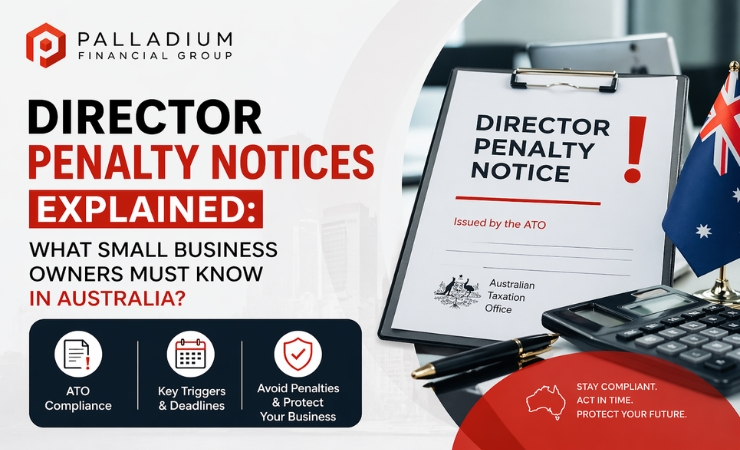
Being a small business owner is an exciting experience with the prospects of establishing your brand value. But it also has significant responsibilities that define success in the long term. These include knowing the Director Penalty Notice (DPN), which can make you aware and in control of the tax obligations of your company.
This blog walks you through what triggers director penalty notices from the Australian Taxation Office (ATO) and how to respond to them in a feasible way.
An ATO director penalty notice (DPN) is an official notice that the ATO sends to company directors. These notices make the company director personally liable to the company’s tax debts. A DPN is one of the tools used by the government to encourage the submission and payment of tax debts promptly. Even in the case that the business is a separate legal entity, directors may be personally liable to pay taxes on behalf of the company.
The director penalty notice Australia is broadly divided into two main categories: Non-Lockdown DPN and Lockdown DPN. To have a clear picture of the differences between these notices, the table below lists the key features of each type.
| Feature | Non-Lockdown DPN | Lockdown DPN |
| When is it issued? | When tax obligations are reported on time but remain unpaid | When tax obligations are both unpaid and not reported within the required timeframes |
| Director’s options | Multiple options available within 21 days | Very limited options available |
| Impact of inaction | Converts into personal liability after 21 days | Personal liability already applies regardless of further action |
| Flexibility level | Higher flexibility and more control for directors | Strict with minimal flexibility |
| Common understanding | Often called a ‘21-day DPN’ | Considered the most serious form of DPN |
A DPN is typically given when a taxpayer does not pay the main tax due dates accordingly. The list provided below provides the small business tax obligations Australia that can cause non-lockdown and lockdown DPNs:
A DPN issued to the business owner from the ATO signals personal liability for company tax debt. To understand the implications clearly, it is important to look at the sequence of events and decisions that unfold once a DPN is received.
The DPN identifies specific debts, typically regarding unpaid PAYG withholding, GST or superannuation guarantee. At this stage, you will be legally liable to pay the debt with a proper BAS lodgement within the stipulated time.
You have 21 days from the date of the notice to reply. During this period, you should act decisively to handle or clear the liability by taking the following actions:
In case the ATO compliance for directors is not addressed in the appropriate manner, they can directly collect the debt from you by means of:
To reduce the DPN exposure, directors need to be attentive to core areas with the help of bookkeeping Perth service providers. They can help you understand the consequences of non-compliance with DPN for your business as well as what steps you can take to avoid such instances. Besides, here are a few general steps you can take with the help of a bookkeeping expert:
You should comply with all your lodgement obligations with the help of a business consultant Perth. This includes:
Clear and up-to-date financial records allow you to identify issues before they escalate. Here’s what you need to do in such situations:
A director penalty notice defense needs a prompt and informed response. Here are a few steps that you can take to address the situation in the right manner:
The first step you need to take is to have a clear understanding of the notice. In this regard, start by examining the DPN in detail with your business tax planner. Here you need to confirm:
Before taking action, determine whether the notice is a lockdown or a non-lockdown. To get more details about which type of DPN is applicable for your business, you prefer taking help from bookkeepers in Perth.
You generally have 21 days from the date of the notice to respond for non-lockdown DPN. Within this period, you need to act rapidly in order to stay compliant with regulatory needs. Here’s what you can do during this three-week window:
If your DPN mentions lockdown, then you become permanently and personally liable for the debt. In this situation, you must pay the company’s debt in full using either company or personal funds.
Since there are legal and financial implications, take assistance from a qualified bookkeeping and tax professional. If your business also requires ongoing tax compliance support, working with experts offering Tax Return Services in Welshpool can help you stay on top of ATO lodgement requirements, reduce compliance risks, and respond to director penalty notices with greater confidence.
In some cases, direct communication with the ATO can help manage the situation. This may involve:
Keep clear records with the help of regional experts like payroll services Perth. They can help you make the following arrangements:
Besides taking the above six steps, confirm with your tax advisor about any other compliance requirements applicable to your business. Since every business (such as retail, fashion, bakery, etc.) has different types of business needs, having a clear idea of which is applicable to your business helps you avoid the DPN.
Also read: ATO Payment Plan Options: What to Do If You Can’t Pay Your Tax Debt
The Managing Director Penalty Notices compliance requires awareness, timely action, and consistent compliance. As outlined above, understanding what exactly causes DPN, how the system works and how to respond to a DPN will assist in transforming the manner in which the role of your director is insured.
Rather than a one-sided punitive action, a DPN could be viewed as a signal to directors to own up and fix the issues at the core level. Regular planning, adhering to filing deadlines, and immediate action are some ways through which directors can lower their risk and also keep their financial and operational strength intact. If you need personalised guidance, consulting a Tax return specialist in East Cannington can help you better understand your tax obligations and maintain long-term ATO compliance.

Copyrights © Palladium Financial Group 2026